CNN values your feedback

1. How relevant is this ad to you?
2. Did you encounter any technical issues?
Thank You!
Your effort and contribution in providing this feedback is much appreciated.
Close
Ad Feedback
Health
Life, But Better
Fitness
Food
Sleep
Mindfulness
Relationships
More
Life, But Better Fitness Food Sleep Mindfulness Relationships
Watch Listen Live TV
My Account
  • Settings
  • Topics You Follow
  • Sign Out
Your CNN account Sign in to your CNN account
My Account
  • Settings
  • Topics You Follow
  • Sign Out
Your CNN account Sign in to your CNN account

Live TV Listen Watch
Edition
US
International
Arabic
Español
Edition
  • US
  • International
  • Arabic
  • Español

Life, But Better
Fitness
Food
Sleep
Mindfulness
Relationships
Follow CNN

  • 2024 Elections
  • US
    • Crime + Justice
  • World
    • Africa
    • Americas
    • Asia
    • Australia
    • China
    • Europe
    • India
    • Middle East
    • United Kingdom
  • Politics
    • SCOTUS
    • Congress
    • Facts First
    • 2024 Elections
  • Business
    • Tech
    • Media
    • Calculators
    • Videos
  • Markets
    • Pre-markets
    • After-Hours
    • Fear & Greed
    • Investing
    • Markets Now
    • Nightcap
  • Health
    • Life, But Better
    • Fitness
    • Food
    • Sleep
    • Mindfulness
    • Relationships
  • Entertainment
    • Movies
    • Television
    • Celebrity
  • Tech
    • Innovate
    • Foreseeable Future
    • Mission: Ahead
    • Work Transformed
    • Innovative Cities
  • Style
    • Arts
    • Design
    • Fashion
    • Architecture
    • Luxury
    • Beauty
    • Video
  • Travel
    • Destinations
    • Food & Drink
    • Stay
    • Videos
  • Sports
    • Pro Football
    • College Football
    • Basketball
    • Baseball
    • Soccer
    • Olympics
    • Hockey
  • Watch
    • Live TV
    • CNN Headlines
    • CNN Shorts
    • Shows A-Z
    • CNN10
    • CNN Max
    • CNN TV Schedules
    • FlashDocs
  • Listen
    • CNN 5 Things
    • Chasing Life with Dr. Sanjay Gupta
    • The Assignment with Audie Cornish
    • One Thing
    • Tug of War
    • CNN Political Briefing
    • The Axe Files
    • All There Is with Anderson Cooper
    • All CNN Audio podcasts
  • CNN Underscored
    • Electronics
    • Fashion
    • Beauty
    • Health & Fitness
    • Home
    • Reviews
    • Deals
    • Money
    • Gifts
    • Travel
    • Outdoors
    • Pets
    • CNN Store
  • Science
    • Space
    • Life
    • Unearthed
  • Climate
    • Solutions
    • Weather
  • Weather
    • Video
    • Climate
  • Ukraine-Russia War
  • Israel-Hamas War
  • About CNN
    • Subscribe
    • Photos
    • Investigations
    • CNN Profiles
    • CNN Leadership
    • CNN Newsletters
    • Work for CNN
Ad Feedback
Health

Flu under the microscope

Updated 11:46 AM EST, Thu February 16, 2017
Link Copied!
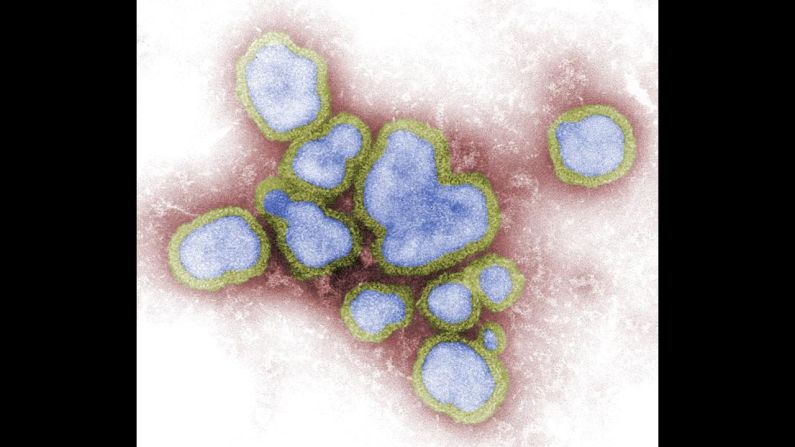
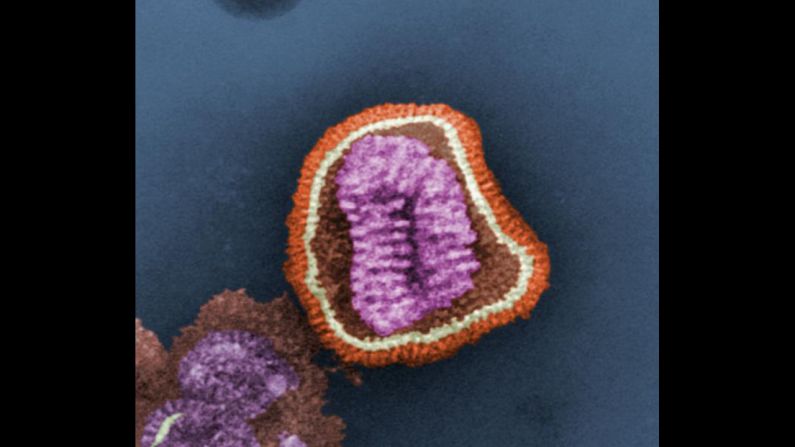
This is an influenza virus particle, also known as a virion, according to the Centers for Disease Control and Prevention. Virions are made up of an outer protein shell and an inner core of nucleic acid: in this case, eight single-stranded RNA segments.
CDC
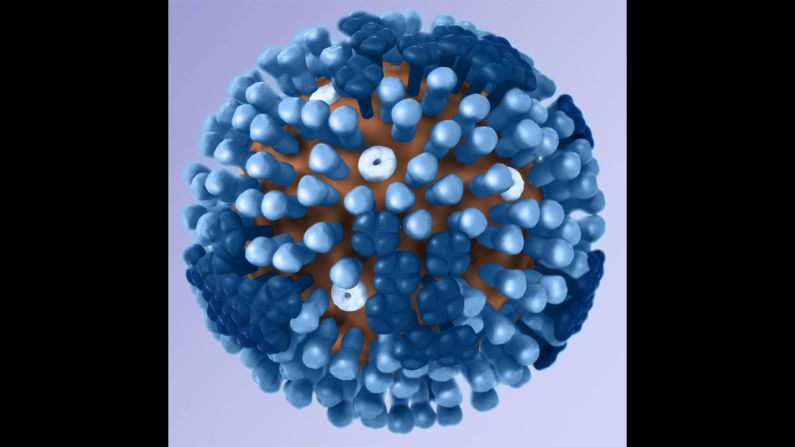
This illustration from the CDC is a 3-D graphical representation of an influenza virion's structure. Influenza viruses are members of the <a href="http://www.britannica.com/EBchecked/topic/433517/orthomyxovirus" target="_blank" target="_blank">Orthomyxoviridae family</a>, according to Encyclopedia Britannica, meaning their virions measure between 80 and 120 nanometers in diameter. Each virion contains hemagglutinin and neuraminidase <a href="http://www.nlm.nih.gov/medlineplus/ency/article/002224.htm" target="_blank" target="_blank">antigens</a>, substances that cause our bodies to produce antibodies. The amount of each antigen determines the strain of the virus, which is where the H#N# naming structure comes from.
This illustration from the CDC is a 3-D graphical representation of an influenza virion's structure. Influenza viruses are members of the Orthomyxoviridae family, according to Encyclopedia Britannica, meaning their virions measure between 80 and 120 nanometers in diameter. Each virion contains hemagglutinin and neuraminidase antigens, substances that cause our bodies to produce antibodies. The amount of each antigen determines the strain of the virus, which is where the H#N# naming structure comes from.
CDC
This image depicts a number of influenza A virions. There are three basic types of influenza viruses -- A, B and C -- but only influenza A can infect animals, such as pigs or birds. When a virus strain enters an animal, it may change, causing a more serious epidemic when it returns to humans.
CDC
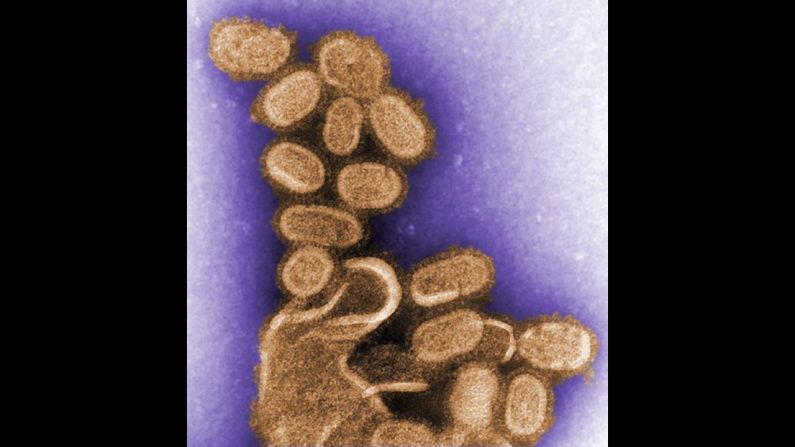
In 1997, scientists took lung tissue from five 1918 Spanish flu victims and extracted the nucleic acid to sequence the flu strain's genome. This image shows the re-created influenza virions that caused the outbreak, infecting close to a fifth of the world's population and <a href="http://www.flu.gov/pandemic/history/1918/the_pandemic/index.html" target="_blank" target="_blank">killing an estimated 30 million to 50 million</a> people in less than a year, according to the US Department of Health and Human Services.
In 1997, scientists took lung tissue from five 1918 Spanish flu victims and extracted the nucleic acid to sequence the flu strain's genome. This image shows the re-created influenza virions that caused the outbreak, infecting close to a fifth of the world's population and killing an estimated 30 million to 50 million people in less than a year, according to the US Department of Health and Human Services.
CDC
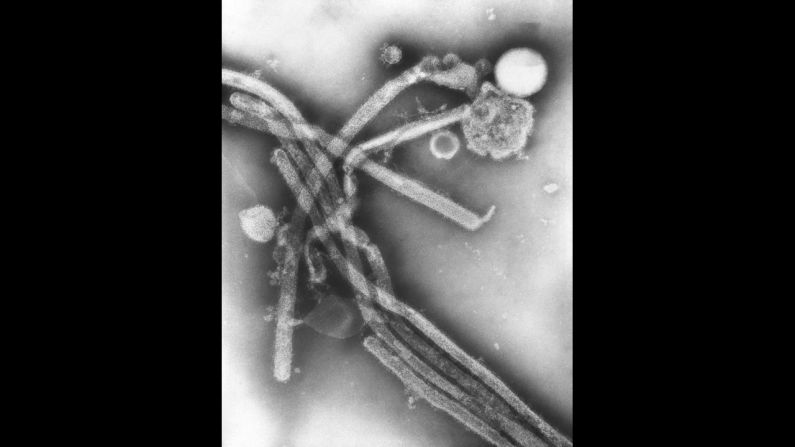
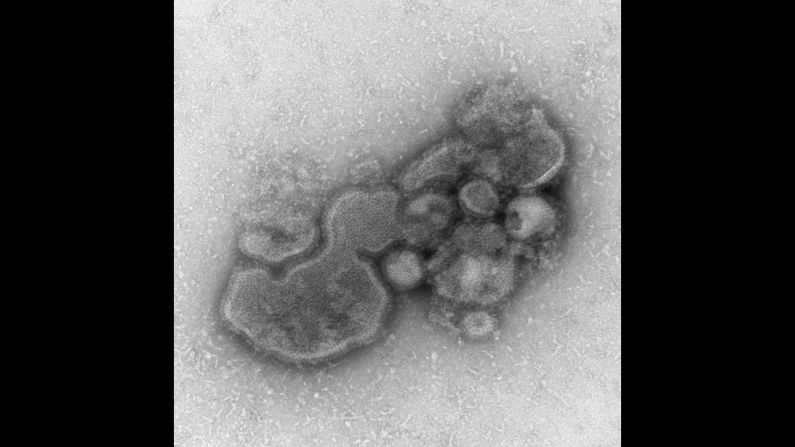
These virions belong to the H3N2 flu virus that started in Hong Kong in 1968, according to the CDC. H3N2 infected an estimated 50 million Americans and killed 33,000 people in the United States, "making it the mildest flu pandemic in the 20th century," <a href="http://www.flu.gov/pandemic/history/index.html" target="_blank" target="_blank">according to the Department of Health and Human Services</a>.
These virions belong to the H3N2 flu virus that started in Hong Kong in 1968, according to the CDC. H3N2 infected an estimated 50 million Americans and killed 33,000 people in the United States, "making it the mildest flu pandemic in the 20th century," according to the Department of Health and Human Services.
CDC
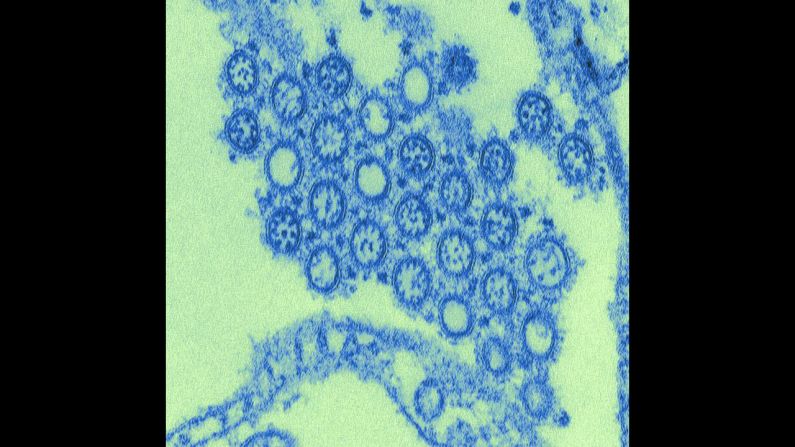
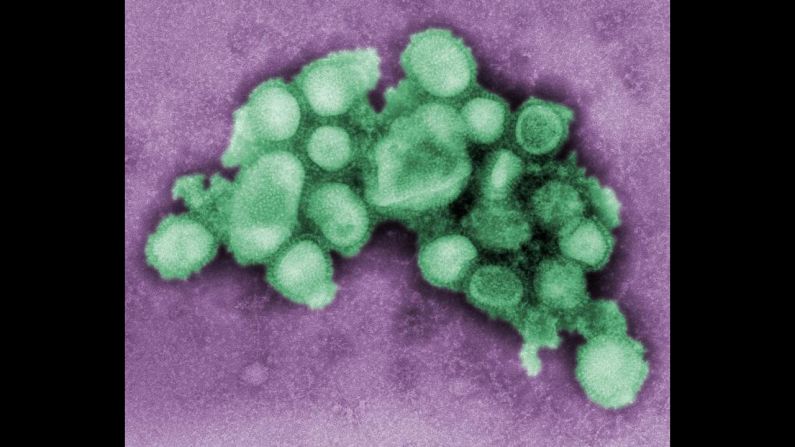
Mexico and the United States first reported human cases of the H1N1, or swine flu, virus in April 2009, <a href="http://www.who.int/csr/don/2009_04_24/en/index.html" target="_blank" target="_blank">according to the World Health Organization</a>. "Because there are human cases associated with an animal influenza virus, and because of the geographical spread of multiple community outbreaks, plus the somewhat unusual age groups affected, these events are of high concern," the WHO said at the time. The disease spread to more than 200 countries and has caused more than 18,000 deaths since 2009.
Mexico and the United States first reported human cases of the H1N1, or swine flu, virus in April 2009, according to the World Health Organization. "Because there are human cases associated with an animal influenza virus, and because of the geographical spread of multiple community outbreaks, plus the somewhat unusual age groups affected, these events are of high concern," the WHO said at the time. The disease spread to more than 200 countries and has caused more than 18,000 deaths since 2009.
CDC
H1N1 was called "swine flu" because it was similar to the virus seen in pigs, as this photo illustrates. The WHO officially called an end to the H1N1 pandemic in August 2010, but cases with the strain still appear each year. "It is likely that the 2009 H1N1 virus will continue to spread for years to come, like a regular seasonal influenza virus," <a href="http://www.cdc.gov/h1n1flu/" target="_blank" target="_blank">the CDC says</a>.
H1N1 was called "swine flu" because it was similar to the virus seen in pigs, as this photo illustrates. The WHO officially called an end to the H1N1 pandemic in August 2010, but cases with the strain still appear each year. "It is likely that the 2009 H1N1 virus will continue to spread for years to come, like a regular seasonal influenza virus," the CDC says.
CDC
In China in 2013, <a href="http://www.cdc.gov/flu/avianflu/h7n9-virus.htm" target="_blank" target="_blank">H7N9</a>, or avian influenza A, was seen in poultry and in people who worked closely with poultry. In 2016, a number of provinces in China have shut down live poultry markets to prevent the spread of avian flu.
In China in 2013, H7N9, or avian influenza A, was seen in poultry and in people who worked closely with poultry. In 2016, a number of provinces in China have shut down live poultry markets to prevent the spread of avian flu.
CDC
My Account
  • Settings
  • Topics You Follow
  • Sign Out
Your CNN account Sign in to your CNN account

Live TV Listen Watch
  • 2024 Elections
  • US
    • Crime + Justice
  • World
    • Africa
    • Americas
    • Asia
    • Australia
    • China
    • Europe
    • India
    • Middle East
    • United Kingdom
  • Politics
    • SCOTUS
    • Congress
    • Facts First
    • 2024 Elections
  • Business
    • Tech
    • Media
    • Calculators
    • Videos
  • Markets
    • Pre-markets
    • After-Hours
    • Fear & Greed
    • Investing
    • Markets Now
    • Nightcap
  • Health
    • Life, But Better
    • Fitness
    • Food
    • Sleep
    • Mindfulness
    • Relationships
  • Entertainment
    • Movies
    • Television
    • Celebrity
  • Tech
    • Innovate
    • Foreseeable Future
    • Mission: Ahead
    • Work Transformed
    • Innovative Cities
  • Style
    • Arts
    • Design
    • Fashion
    • Architecture
    • Luxury
    • Beauty
    • Video
  • Travel
    • Destinations
    • Food & Drink
    • Stay
    • News
    • Videos
  • Sports
    • Pro Football
    • College Football
    • Basketball
    • Baseball
    • Soccer
    • Olympics
    • Hockey
  • Watch
    • Live TV
    • CNN Headlines
    • CNN Shorts
    • Shows A-Z
    • CNN10
    • CNN Max
    • CNN TV Schedules
    • FlashDocs
  • Listen
    • CNN 5 Things
    • Chasing Life with Dr. Sanjay Gupta
    • The Assignment with Audie Cornish
    • One Thing
    • Tug of War
    • CNN Political Briefing
    • The Axe Files
    • All There Is with Anderson Cooper
    • All CNN Audio podcasts
  • CNN Underscored
    • Electronics
    • Fashion
    • Beauty
    • Health & Fitness
    • Home
    • Reviews
    • Deals
    • Money
    • Gifts
    • Travel
    • Outdoors
    • Pets
    • CNN Store
  • Science
    • Space
    • Life
    • Unearthed
  • Climate
    • Solutions
    • Weather
  • Weather
    • Video
    • Climate
  • Ukraine-Russia War
  • Israel-Hamas War
  • About CNN
    • Subscribe
    • Photos
    • Investigations
    • CNN Profiles
    • CNN Leadership
    • CNN Newsletters
    • Work for CNN

Health
Watch Listen Live TV
Follow CNN
My Account
  • Settings
  • Topics You Follow
  • Sign Out
Your CNN account Sign in to your CNN account

Terms of Use Privacy Policy Ad Choices Accessibility & CC About Subscribe Newsletters Transcripts Help Center

© 2024 Cable News Network. A Warner Bros. Discovery Company. All Rights Reserved.
CNN Sans ™ & © 2016 Cable News Network.